Editor’s note: This is the latest in our series on the 5 Big Issues facing us as we head into the 2026 election. Today’s issue: Affordability.
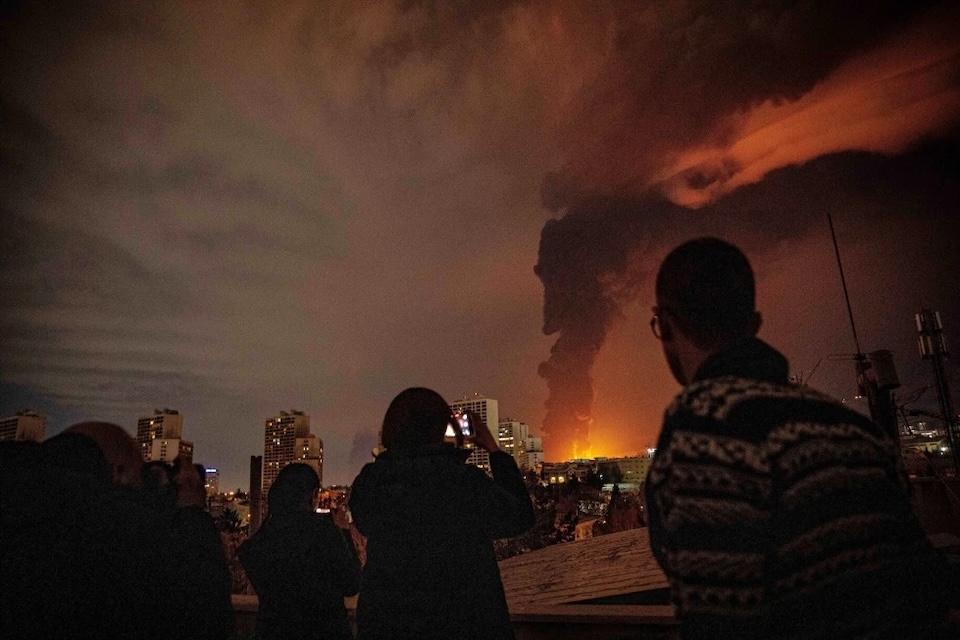
In the featured image above, Residents watch and take pictures as flames and smoke rise from an oil storage facility struck as attacks hit the city during the U.S.–Israeli military campaign in Tehran, Iran, Saturday, March 7, 2026. Source: APNews.com
When Donald Trump campaigned for reelection, he made two promises that resonated with many Americans: no new foreign wars and a stronger, more affordable economy. Today, it’s clear that neither promise has held up. Instead, his illegal war of aggression with Iran is hitting Americans where it hurts most—their wallets.
For rural communities in Idaho, the consequences are especially real. Farmers and families alike are now facing rising costs driven directly by global instability.
Farmers Are Getting Squeezed
Two of the most important inputs for farming—fertilizer and diesel fuel—are becoming more expensive and harder to access.
Fertilizer supplies are tightening fast
The closure of the Strait of Hormuz has largely halted exports of nitrogen fertilizers produced in the Persian Gulf. That’s a major disruption. The region accounts for a significant share of the global fertilizer market, including roughly half of the world’s urea supply and about 30% of ammonia production.
The United States imports about 15% of its fertilizer from the Middle East. That may not sound like a majority, but in a tightly balanced global market, losing that supply creates ripple effects everywhere.
For Idaho farmers, this isn’t theoretical. Those who didn’t lock in fertilizer orders early may find themselves unable to get what they need at all—right when planting decisions matter most.
Fuel costs are climbing
At the same time, diesel prices are rising quickly.
Global oil prices have surged, with Brent crude jumping to around $119 per barrel—up from roughly $70 before the conflict began. That increase is already showing up at the pump, where fuel prices have climbed more than a dollar per gallon since the beginning of the war.
Diesel isn’t just another expense for farmers—it powers tractors, irrigation systems, and the trucks that move crops to market. When diesel prices rise, everything becomes more expensive.
Higher Costs at the Grocery Store
These increases don’t stay on the farm. They ripple outward.
Higher fuel costs mean it’s more expensive to transport food to grocery stores. Fertilizer shortages can reduce yields or increase production costs. Even packaging becomes more expensive, since many materials are made from petroleum products.
The result? Higher prices at the checkout line for families across Idaho.
This Won’t End Overnight
Even if the conflict were resolved tomorrow, the economic impact wouldn’t disappear right away.
It takes 30 to 45 days for fertilizer shipments to travel from the Middle East to ports like New Orleans. Supply chains don’t restart instantly—they take time to rebuild. Backlogs, shortages, and higher prices can linger well after the headlines fade.
There’s also a real concern that attacks on oil and gas infrastructure could cause longer-term damage. If production capacity is disrupted, elevated prices could stick around for months—or longer.
Broken Promises, Real Consequences
For many voters, the appeal of avoiding foreign conflicts and lowering costs was simple and practical. But today, Idaho families are facing the opposite reality: a foreign war that’s driving up everyday expenses.
In rural communities, where margins are already tight and costs are already high, these changes aren’t abstract. They affect planting decisions, household budgets, and long-term financial stability.
The connection between global decisions and local consequences has never been clearer.
And for Idaho, it’s a reminder that what happens overseas doesn’t stay overseas—it shows up in our fields, our trucks, and our grocery bills.
So What Now?
Donald Trump is not actually on the ballot this year, but his enablers are. Jim Risch, Russ Fulcher, and Brad Little have all aligned themselves with Trump and been silent in the face of his corruption and brazen disregard for the law. They are all up for election, and there are strong, capable Democrats running against them.
Let’s remember this when we go to the polls in May and November.

###
Do you have a question? A suggestion? A topic you’d like to see covered in a future article? If so, please leave us a message by leaving a comment below or through the Contact Form. We look forward to hearing from you.